
7 Top Motorcycle Accessories
With Christmas just around the corner, you might be wondering what to get your favourite motorcycle enthusiast or even a little something for yoursel...
 Phoenix Motorcycle Training LTD
 Phoenix Motorcycle Training LTD

The unique sense of freedom that comes with motorcycling is undeniable. But the excitement is tempered by the inherent serious risk. Motorcyclists are some of the most vulnerable road users. That’s why comprehensive foundational skills training isn’t just advisable, it’s essential.
In the UK, your journey to becoming a motorcyclist begins with Compulsory Basic Training (CBT). This essential course is your starting block for two-wheeled travel and the first step for any new rider.
CBT training for motorcyclists is a crucial foundational training and legally required by the UK’s motorcycle licensing body, the DVSA. Its introduction wasn’t arbitrary, nor an after thought. It came about as a direct response to a national crisis, too many young motorcyclists were being lost on our roads.
CBT training was implemented to dramatically improve rider safety and protect the most vulnerable novice riders. This foundational course isn’t a mere bureaucratic hurdle; it’s the foundation preserving road safety culture for modern UK motorcycling. This blog explores the reasons why the CBT was introduced, covers the safety statistics proving its worth, and how you can make the most of your initial CBT training with us.
Before 1990, getting on the road with a motorcycle was alarmingly easy. No formal instruction or motorcycle experience was needed. If you had a car driving licence, a dose of courage and a fair sense of balance you could be on your way! Obviously, that led to a lot of incompetent riders taking to public roads.
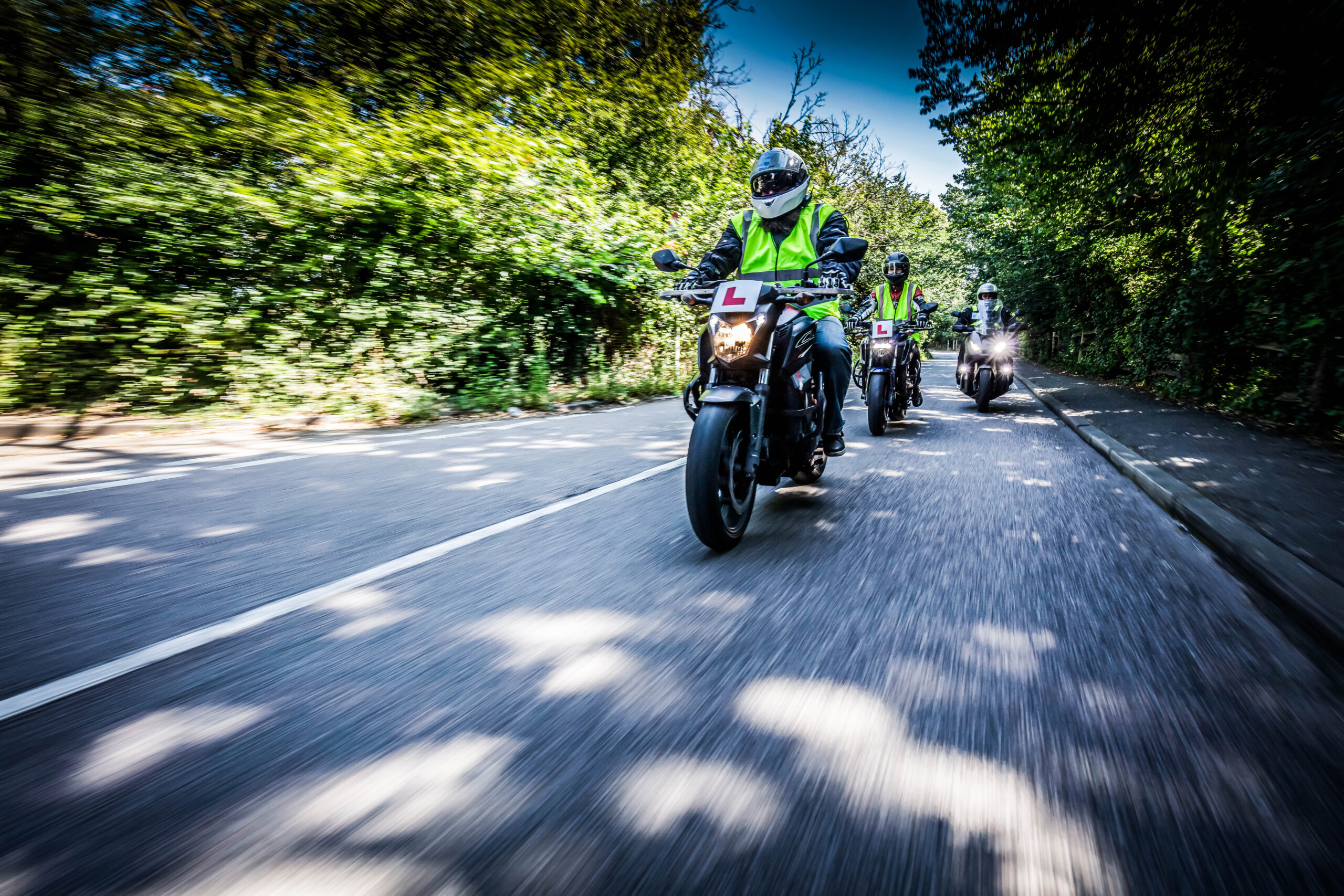
The results were alarming. In the early 1980s, over 20,000 serious injuries and motorcycle casualties were recorded. A large proportion of these involved young, inexperienced riders on small capacity bikes (usually 50cc or 125cc), equipped only with L-plates and relying on little more than courage and a handbook.
This lack of basic training was creating an escalating public safety crisis. The most vulnerable riders were the least experienced: the young, often teenage, riders on smaller machines. We were losing our youth on our roads. The shockingly high casualty rates throughout the 1970s and 1980s caused outcry from parents and families who’d lost loved ones. The government had to respond.
The system allowing riders to gain experience on the road rather than before it, clearly needed an overhaul. Compulsory Basic Training was the government’s response to the crisis. This course makes sure every new rider, from day one, possesses a basic level of competence and road awareness. It’s a course that’s saved countless lives and prevented innumerable serious injuries.
Compulsory Basic Training (CBT) was mandated across the UK on December 1st, 1990. It’s a comprehensive course, typically taking a day to complete. It doesn’t test perfection. It checks and improves basic riding skills and road awareness before you’re allowed onto public roads alone.
This fundamental shift makes sure training comes before unsupervised riding. CBT training is structured around five mandatory elements. Each element builds on the last to create a foundation of core competencies and safe riding routines.
Once you complete all five elements successfully, you’ll receive your CBT certificate (DL196). It’s valid for two years and lets you legally ride on public roads with L-plates (subject to engine size restrictions).
The most compelling argument for the success of CBT training is in the numbers. The government’s aim in 1990 was to curb the high casualty rate for new riders. The data shows they were successful in both the short term and over the following decades.
The introduction of CBT was the culmination of safety measures targeting new riders in the late 1980s. The statistical effect on serious injuries was immediate and dramatic:
UK Government data shows that the number of seriously injured motorcycle casualties fell sharply between 1983 and 1991. The high number of fatalities recorded in the late 70s and early 80s (over 1,000 deaths per year) dropped by over half in 1991, following the introduction of CBT training.
This trend was just the beginning of the positive safety changes the CBT training brought about for riders.
The long-term safety culture instilled by CBT continues to keep new riders safer than their historic counterparts. It’s proof that foundational training is crucial for reducing risk for riders.
Over a broader period (2004–2022), improved on-road safety continued. The UK saw a 40% reduction in motorcyclist fatalities and a 35% reduction in serious injuries (adjusted figures).
Advancements in motorcycle technology, safer gear, and improvements in road engineering undoubtedly contribute to the overall reduction in risk. But there’s no denying that foundational training is the core reason for the improved safety for modern riders. The CBT ensures every new rider starting their journey has the essential skills and awareness needed for navigating the roads safely. CBT training teaches new riders how to become active participants in their safety rather than vulnerable statistics.
The safety statistics following the introduction of CBT training places a responsibility on you too. The best way to honour the purpose of foundational motorcycle skills training is to choose a high-quality, reputable school. The focus should always be on comprehensive instruction, not just box ticking.
CBT training isn’t a course you want to race blindly through. It warrants your time and attention because it stops you from becoming a statistic people shake their heads over. Taking time to choose the right motorcycle training school and develop the skills you need to ride safely is something your future-self will thank you for.
We set the benchmark for quality and comprehensiveness. We’re the largest training school in the UK. We got here because we’re invested in your safety. The best way to see a return on our efforts is by making training fun, comprehensive and tailored to your learning style.
We make sure every rider receives the full benefit of the course. This includes:
Ready to take the first step towards safe, legal riding?
Don’t let compulsory basic training for motorcyclists remain a mystery. Check out our FAQs below to satisfy your curiosity and answer your burning questions!
Yes. Many reputable schools, including us, cater to complete novices. We offer tailored support, structured courses, and preparatory resources that prepare learners who’ve never sat on a bike feel supported, confident, and competent throughout the entire training day. We’ll happily discuss creating a tailored package for riders who feel they need additional support to ride safely on the road. Get in touch with us today!
Companies that are deeply invested in rider safety and progression often offer the most comprehensive training. We’re a leading CBT training provider because of our high-quality, structured training that goes beyond the basic mandate. Our pre-CBT training resources set our students up for success from the moment they book their training with us. We’re 100% invested in making sure riders are genuinely safe and prepared for the first step in their riding career.
Prices for CBT training vary significantly based on location, equipment hire, and the quality of instruction. It can be tempting to choose the cheapest option, but quality should be the deciding factor. That’s because learning to ride safely and confidently is what will help you become a competent rider who knows how to reduce their risk on the road.
Lower upfront cost CBT training providers often charge for insurance, petrol or even bike hire on the day. That means they end up costing around the same price as a higher priced course. Thoroughly check what you’ll get for your course cost before committing to any motorcycle training school for your CBT training.
Yes, absolutely. If your two-year DL196 certificate is expiring and you haven’t yet passed your full motorcycle test, or if you failed to meet the standards on your first attempt, you can retake the CBT with the same school.
The CBT course was introduced in response to the shockingly high casualty rates among young, inexperienced riders in the 1970s and 80s. Its primary aim is to make sure every novice rider gains a basic level of competence, machine handling skills, and road awareness before being allowed to continue learning on public roads. The resultant Certificate of Completion (DL196) is the mandatory document confirming this basic competence.
Compulsory Basic Training (CBT) was officially introduced across Great Britain on December 1st, 1990. This is when Compulsory Basic Training (CBT) training became a legal requirement for new riders.
In some cases, CBT courses are not required for some riders. These circumstances include people who only want to ride a moped (up to 50cc) and passed their car driving test before 1 February 2001.
People who want to ride a motorcycle and have a full moped licence from passing a moped test after 1 December 1990, those who have a full motorcycle licence for one category and want to upgrade to another.
Some people who live and ride on some of the UK’s offshore islands will also be exempt from taking a CBT course. Full details of these offshore islands are available on the gov.uk website.
Taking a theory test is a requirement for all motorcycle licence types.
Each theory test includes a hazard perception test.
This test is to see how well you can perceive the development of potential hazards when riding on the road. Being able to recognise hazards is an essential element of motorcycle safety as it enables you to take the necessary actions to avoid danger, such as slowing down or changing position.
This clip gives an example of a hazard perception test.
CBT courses vary in price between schools but is around £170 for the day. If you need to re attend to complete additional training, the cost will be discussed by the office, depending on the recommendation of the instructor.
A Phoenix Motorcycle Training CBT includes everything you need to take the CBT course. We would advise your bring lunch and sturdy boots or shoes and you MUST provide your provisional or driving licence required by the DVLA.
Everyone is different and training times for CBT courses vary.
You can usually expect a CBT course to last for at least a day and certification can be achieved in this time.
Your instructor will keep you informed about your progress throughout the day and help you improve in any areas that may be needed to reach the certification level.
The story of the introduction of CBT training in the UK is a great reminder of how important it is to be properly prepared when it comes to riding. The sharp reduction in serious injuries and fatalities since its 1990 introduction gives undeniable proof that the foundational training saves lives.
CBT isn’t just a formality. It’s the opportunity to develop life-saving skills and confidence on the road. Are you ready to join the millions of safe riders CBT has created? Start your two-wheeled journey the right way with us.
With Christmas just around the corner, you might be wondering what to get your favourite motorcycle enthusiast or even a little something for yoursel...

If you love motorcycle riding, you’ve probably daydreamed about riding a motorbike for a living. A professional racer or stunt rider is OK for some...

Getting a UK motorcycle licence can seem a complicated process. Particularly when compared to a driving licence for a car. Whether you choose the pro...
Phoenix Motorcycle Training is the UK’s highest rated and largest motorcycle training school, so wherever you’re going, we can help you get there.
This website uses cookies to personalise content, ads, and analyse traffic, sharing data with partners who may combine it with other information. See our Privacy Policy for more information.