
7 Top Motorcycle Accessories
With Christmas just around the corner, you might be wondering what to get your favourite motorcycle...
 Phoenix Motorcycle Training LTD
 Phoenix Motorcycle Training LTD

It’s no secret that our road surfaces could do with some TLC. Puckered tarmac, potholes and loose shale are the bane of drivers and riders alike. The problem is, poor surfaces have a bigger impact for motorcyclists than drivers. Safe motorcycle riding on poor road surfaces is a skill that’ll stand you in good stead while the government makes good on their promise to sort things out. Smooth riding is safe, specific motorcycling skills for rough surface riding will keep you even safer.
Starting this month, the UK government plans to begin spending the £7.3 billion specifically put aside for local highway maintenance. We have over 245,000 miles of road in the UK. Roughly 79% of them are classified as minor roads. The other 21% are motorways, ‘A’ and ‘B’ roads. Getting them all up to a safe standard will take time, which is why the government’s allowing four years to complete the work.
While the hefty investment is welcome, it’s the RAG rating system that will help riders and other road users keep track of progress. The 154 Local Highway Authorities have been given a traffic light benchmark rating—red, amber or green—based on three pillars: actual road condition, level of capital spend, and adoption of best practices (like preventative treatments instead of just filling holes).
To get the full roadworks payout, each council must publish annual Transparency Reports showing residents exactly where the money went. You can already see how your county rates in the RAG system. As works continue, how many potholes are actually fixed and whether road surface improvements have been made will be easily compared.
In the meantime, learning a few safe motorcycle riding skills for poor road surfaces will make life easier. Read on for actionable tips and advice for safe riding on rough roads.
Record wet weather brought us a pothole plague. That crumbling tarmac creates holes and the sliding shale which is a hazard all its own. And hazards are a certainty, like death and taxes. Developing your motorcycling skills is the best way to stay safe; keeping your bike stable and sure is the ultimate tactic whatever the weather or road surface does.
Potholes can appear unexpectedly, so ‘planning’ for them may seem strange. But riding on a ruined road isn’t only about what your hands are doing, it’s where your eyes are looking too. Even a few seconds’ warning will give you time to prepare and plot your path successfully. So give yourself the time you need:
Releasing your brakes before impact takes the load off your front forks, giving your bike more bounce. Anchoring your feet to the pegs and pushing up from your seat gives you more stability while protecting your spine from jolts.
The clip above shows how to anchor yourself to the pegs (07:05), Discusses the neutral body position (08:27) and keeping your eyes trained where you want to go (10:08).
Riding on rough surfaces with the added challenge of slidey shale and loose gravel could have some motorcyclists breaking out in a sweat. There’s no need to though, if you know the rules for navigating loose surfaces.
Leaning on slippery surfaces is a dangerous tactic as you’re inviting your wheels to slide out from beneath the bike. Stay upright wherever possible. If you do need to turn, keep the bike as upright as possible and use a touch more counter-steering to initiate your change in direction.
It’s tempting to tense up and tighten your grip when you hit gravel; but you need to keep a neutral grip and loose upper body to allow your bike to track through uneven ground. Keeping upright and loose gives you and your bike the best chance possible of getting through uneven surfaces safely, without mishaps.
The best way to get comfortable with the loose riding feeling is to take a day on the trails. There is no better classroom for managing uneven surfaces than a little off-road riding on muddy tracks. The skills you learn off road are directly transferable to what you need for safe motorcycle riding on poor road surfaces.
It’s a grim thought, but the reality of riding on poor surfaces is that sometimes, the road wins. If you do come off—especially on a remote, poorly maintained road or in low-light conditions—your top priority is making sure you can be seen immediately.
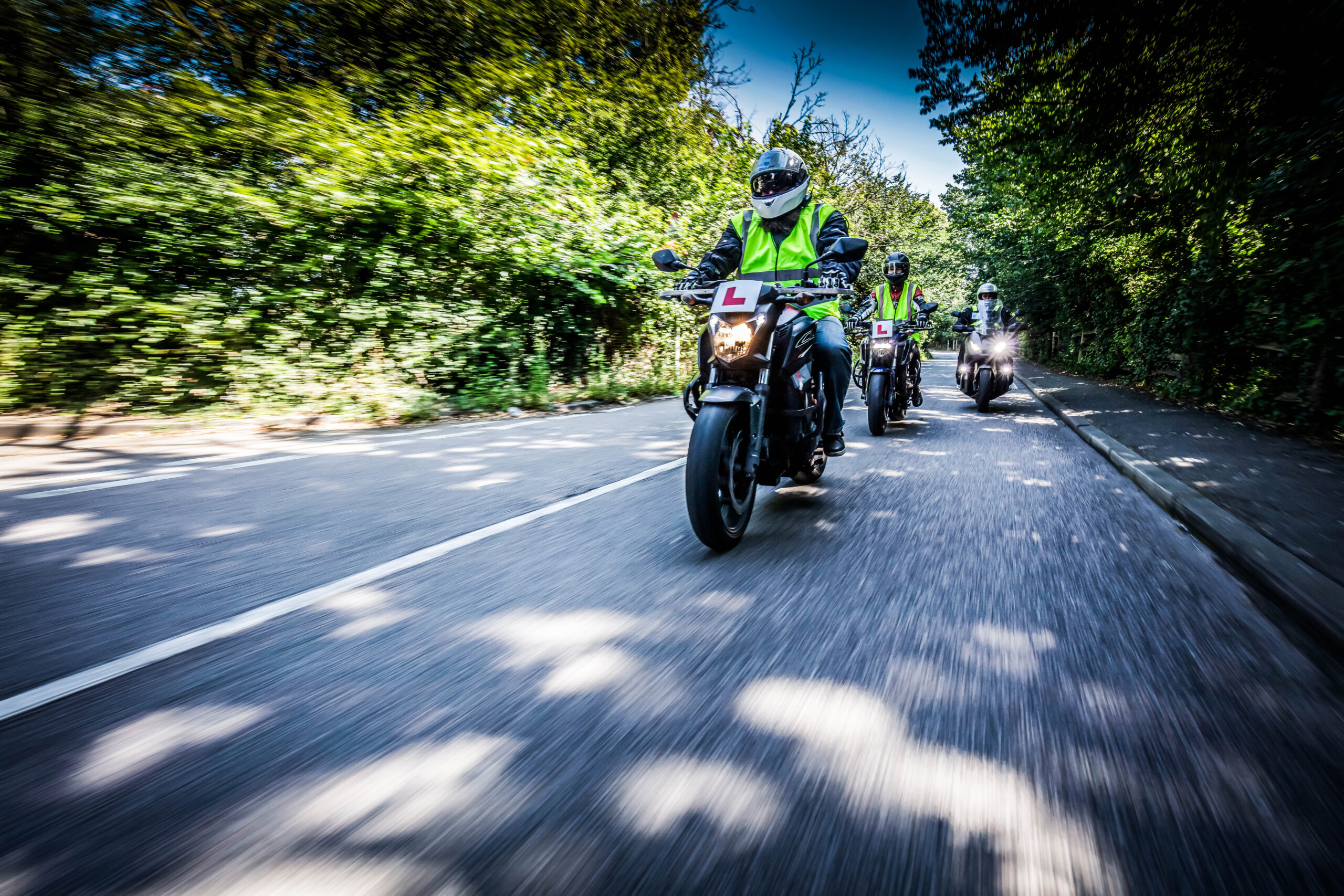
Being visible is about self-preservation. High-visibility gear creates the contrast you need against the grey, pothole-strewn tarmac. This will help drivers register your presence long before they reach you.
If you’re forced to stop or if you’ve had an incident, treat yourself as an active hazard. Don’t wait for others to spot you; use your bike’s visibility tools:
Remember, if you’re down in the road, the goal is to make it impossible for a driver not to see you. Staying visible is your essential layer of your hazard perception toolkit. If you find yourself in a fix on a motorway, the latest National Highways advice on breakdowns will keep you safe.
Potholed roads and loose shale are just part of the problem of riding on rough roads. The other, often bigger, hazard is other road users. They’re dodging and swerving to save their suspension too. And, of course, there are mobile roadworks, sometimes stationary just beyond a bend, working hard to fix the poor surfaces you’ve been cursing as you ride. Handling them takes a whole new level of expertise.
When the car ahead suddenly darts toward the center line or brakes hard, don’t assume they’re distracted. It’s quite possible they’re avoiding a pothole you’re yet to see. In our pitted tarmac landscape, vehicles in front or heading towards you can become unpredictable obstacles.
Roadworks are a necessary evil, but they can be poorly signposted or hidden around blind corners. A stationary highway maintenance van is a lethal object for an inattentive rider. Stay sharp and look for indications they’re improving the road you’re using.
The difference between a close call and a safe ride is often down to how quickly you register a threat. Hazard perception is a skill that dies if you don’t use it, but you can keep it tuned. Practicing from the comfort of your home is a safer bet than pushing yourself beyond your limits while riding.
ESitu’s online Hazard Perception practice tests are a great way to keep your brain in gear and primed for spotting surprises before they become threats. This gold standard of keeping observation skills sharp is the perfect way to maintain your riding edge safely, year round. Try their online tests for motorcyclists to see how you measure up and keep your skills alive.
Road conditions in the UK will always be a variable—the weather changes, the tarmac crumbles, and the debris shifts. Your skill set is the one thing you can control. There is no point hoping for perfect roads. Your expert edge comes from accepting the road is dynamic and ensuring your responses are consistent, calculated, and calm.
Advanced training gives you that calm confidence. It’s not just for those just starting out; it’s the best way to replace panic-mode-reflexes with trained, effective muscle memory. In a split-second hazard, you won’t switch to unhelpful natural reactions, instead, you’ll sink into well-trained responses that’ve become second nature. Conscious practice and professional guidance turn moments of terror into controlled, managed adjustments that leave you feeling accomplished.
Whether you’re looking to refine your observation, master advanced positioning, or simply rebuild confidence after a season dodging potholes, professional training is the fastest route for you. Which advanced course you choose depends on the level you’re starting from and the specific skills you want help with.
First, stabilise the bike and pull over to a safe area away from moving traffic. Do not attempt to ride on a flat or damaged tyre. This can destroy the rim, leading to a total loss of control. Once in a safe location, check for visible damage to the wheel rim and suspension. If the bike is unrideable, call for professional recovery.
If the pothole was a direct cause of the damage, take these steps:
In the UK, road maintenance is split according to the type of road. The Local Highway Authority (LHA)—usually a department of your county or council— takes care of local roads. Major motorways and strategic “A” roads are maintained by National Highways.
You can report hazards directly to the council responsible for that specific road. Most councils have a dedicated “Report a Pothole” portal on their website. For a centralised tool, you can use the GOV.UK “Find your local council” to get redirected to the correct reporting page. It’s important to take the time to report these hazards because it creates the paper trail used to force councils to act under the RAG system.
There is no safe road guarantee. Instead, you should look for warning signs:
If you see these signs, adjust your speed, increase your following distance, and ride gently—avoiding sudden inputs on the brakes or throttle.
In the event of an accident, your priority is the safety of everyone involved and the prevention of further collisions. Call 999 and ask for Police and Ambulance services. To prepare for this situation, read our guide Biker Down: Would you know what to do in an accident? to understand the immediate steps you should take to assist, protect the scene, and alert emergency services.
With Christmas just around the corner, you might be wondering what to get your favourite motorcycle...

TL;DR: There’s never been a better time to join the UK’s highest-rated motorcycle training netw...

Getting a UK motorcycle licence can seem a complicated process. Particularly when compared to a dri...
Phoenix Motorcycle Training is the UK’s highest rated and largest motorcycle training school, so wherever you’re going, we can help you get there.
This website uses cookies to personalise content, ads, and analyse traffic, sharing data with partners who may combine it with other information. See our Privacy Policy for more information.