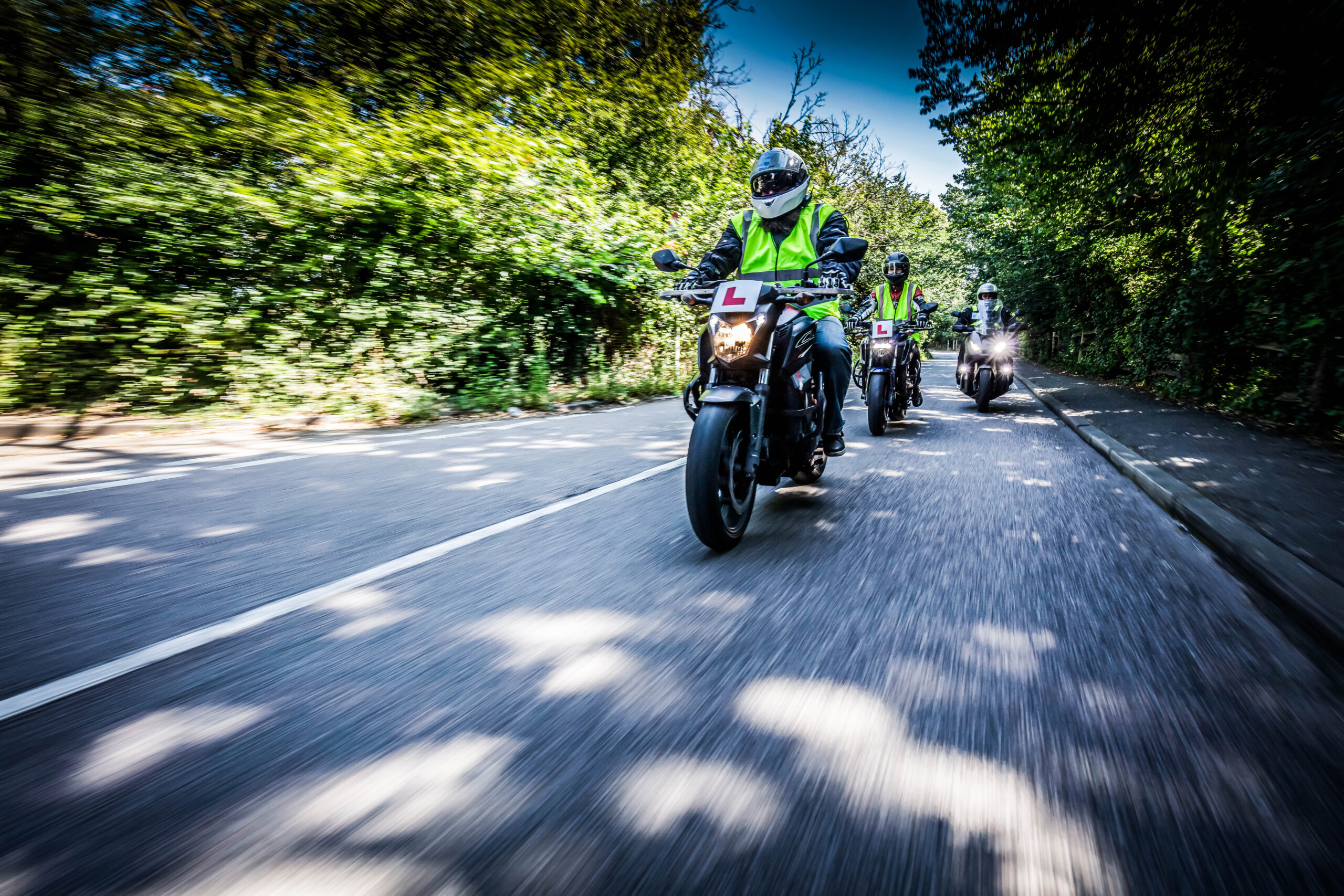

TL;DR: Some UK politicians are calling for a ban on CBT certificates for delivery rider use because of road safety issues. That’s a mistake—it ignores delivery app pressure and could force gig workers into making the choice between giving up their livelihoods or using illegal eBikes. We believe there’s a better way.
Courier riders on L-plates across the UK are getting pressure from all sides. UK politicians are calling them a road hazard while delivery apps incentivise faster and more difficult delivery times. Sensationalist headlines are calling for a reactionary fix: ban delivery riders from working on a Compulsory Basic Training (CBT) certificate.
It is easy to see why this simplistic approach is being called for. Anyone unfamiliar with the last-mile delivery sector could assume stripping L-plates from commercial riders is an instant win for road safety. But they’d be mistaken.
Scapegoating CBT riders and rider training ignores the root causes of poor riding behaviour from some couriers. Not only that, it penalises hard-working couriers and risks the creation of even more dangerous road conditions.
Many couriers are now asking a straightforward question: can delivery riders use a CBT legally, or are the rules changing? The short answer is yes, you can. But getting to grips with the underlying debate behind these headlines will help you protect your two-wheeled livelihood.
The training’s fine, the algorithmic pressure isn’t
It’s a different kind of engine that’s driving poor riding behaviour—the economic one pushing gig riders to deliver faster in unsafe riding conditions. The issue is rarely a lack of licensing knowledge. The pay-per-drop business model used by major delivery platforms is asking gig riders to deliver the near-impossible: faster than fast food at any time of day in any type of weather.
This isn’t our defensive stance—independent academic research backs it up. A landmark study by University College London (UCL) researchers Nicola Christie and Heather Ward investigated the exact differences between directly employed restaurant delivery riders and freelance gig-economy couriers. The full report was published in the Safety Science Journal. Here’s what they found:
- Algorithmic pressure: Freelance gig riders work under pay-per-drop algorithms with intense time pressures. 56% admit to speeding and 21% have run red lights due to employer deadline stress.
- Distraction on the road: Over half of gig riders (57%) are distracted by phone notifications while riding. There’s an expectation for them to accept incoming jobs. Just 21% of employed riders have the same pressure.
- Employment structure: Directly employed restaurant riders—who are paid an hourly wage rather than per delivery—display significantly safer riding habits, have lower crash involvement (7% vs 25%), and collect fewer licence penalty points.
When a rider’s income depends mainly on how quickly they can complete a drop and move onto the next, the system itself is incentivising speed and risk-taking. Blaming delivery rider road safety issues on inexperienced CBT certified riders or the syllabus that trained them ignores the reality gig riders face each day. Even experienced riders facing severe time pressures would be hard-pressed to reach quotas for a living wage.
What an outright ban on L-plates risks
Knee-jerk blanket bans that skip public consultation with people on the ground nearly always come with unexpected consequences. Banning delivery riders on L-plates from working for food apps doesn’t mean gig riders will just do “something else” to pay their bills. The last-mile delivery sector will still need riders. Those riders will be forced into darker, unregulated territory.
If CBT certificate holders are barred from delivering on legally registered and powered scooters or motorcycles, thousands will have no choice but to pivot immediately. The most likely result? A mass shift toward illegal, unregulated and unregistered e-bikes with the same (or worse) road safety issues.
When couriers change from light motorcycles to unregulated e-bikes, you get:
- Loss of registration, accountability & enforcement: A moped or 125cc motorcycle carries a registered number plate. If the rider breaks traffic laws, cameras and police can identify the vehicle and hold the owner accountable. An unregistered e-bike rider is anonymous.
- No training: Completing a CBT requires a full day of professional instruction covering vehicle controls, road positioning, safe rider routines and manoeuvring, and live road riding. Unregulated or illegally modified e-bike riders don’t get any road training at all.
- No insurance: Legally registered scooters and motorcycles require valid commercial hire-and-reward insurance. Pushing couriers onto illegal e-bikes leaves pedestrians, motorists, and the riders themselves completely unprotected in a collision.
Banning L-plates doesn’t improve road safety—it removes the ability to enforce penalties, turning a traceable delivery sector into an invisible free-for-all.
A better solution than blanket bans
Instead of bans that threaten livelihoods and push riders into unregulated alternatives, policymakers need to focus on practical solutions that tackle the cause of the problem rather than the symptoms.
Transport for London (TfL) already has a framework for that solution. Their TfL Motorcycle Road Safety Charter unites major delivery platforms around a shared commitment to courier welfare and urban road safety.
Penalising individual couriers for trying to make a living won’t work; meaningful reform for delivery app safety regulation will:
- Fixing pressured pay structures: Moving away from tight pay-per-drop times during severe weather or extreme rush hours removes the pressure riders feel to take dangerous risks.
- In-app safety controls: Restricting app interfaces and notifications while a vehicle is moving stops couriers from splitting attention to interact with screens while navigating traffic.
- Platform accountability: Ensuring delivery companies actively check and verify gig riders have valid commercial insurance, roadworthy and legal bikes, and wear appropriate safety gear before delivering orders.
Politicians need to sit down with training providers, sector experts, and working couriers who understand the daily reality of UK roads. Collaborative regulation holding app platforms accountable while keeping safe, legal pathways open for working riders will make the difference to road safety that a blanket L-plate ban for delivery riders never will.
Upgrading your skills and broadening your horizons
Defending L-plate couriers against reactionary bans is just part of our response. Supporting riders to upgrade to a full motorcycle licence is the other. That’s because relying on a CBT indefinitely isn’t a secure long-term strategy for working riders. Nor does it lead to the new opportunities and rider benefits that a full licence does.
For couriers who want to protect their income and build a lasting career with their motorcycle skills, progressing past the CBT has key advantages:
- Career progression and income security: Holding a full motorcycle licence (whether A1, A2, or the Full Unrestricted A) future-proofs your livelihood against potential legislative changes for L-plate rules. It also opens opportunities for longer-distance courier work, motorway routes, and higher-paying roles relying on motorcycle experience and skills.
- Advanced roadcraft, reduced fatigue, better machines: Comprehensive training for the full motorcycle test sharpens hazard perception, cornering technique, and defensive positioning. Better roadcraft reduces daily physical stress, fatigue, and near-misses during long urban shifts. A full licence allows you to ride larger, more stable motorcycles or maxi-scooters.
- Lower insurance premiums: Holding a full licence and demonstrating higher-level qualifications can lower commercial hire-and-reward insurance costs over time. That means you can reduce your costs while increasing your earning potential.
Investing in higher-level training lets you gain the skills, confidence, and qualifications needed to ride safer and earn more.
FAQs about the CBT and delivery riding
Yes. You can legally work as a delivery rider with a valid CBT certificate. You need to make sure your moped or scooter is registered, roadworthy, and covered by valid commercial hire-and-reward insurance.
No. Standard motorcycle insurance for social, domestic, and pleasure (SD&P) riding does not cover your employment for commercial food or parcel delivery. You’ll need to get specific hire-and-reward commercial insurance to have legal gig rider cover for making deliveries.
Your CBT certificate is valid for two years. There is no automatic extension for delivery riders. If you don’t pass your full motorcycle test within that two-year window, you must retake the CBT course to continue riding legally.
There is currently no law banning CBT certificate holders from working as delivery riders. There is an active consultation by the DVSA looking into the entire motorcycle training and licensing system including minimum learning periods and progressive access to the full licence levels (A1, A2 and full unrestricted A). Any changes based on these consultations will take time—at least 18 months—before they become law.
Let’s protect livelihoods and elevate riding standards
A ban on CBT use for delivery riders is a knee-jerk attempt to fix a symptom rather than the issue. Stripping working couriers of their L-plates doesn’t make roads safer—it jeopardises livelihoods, ignores the actual problem, and risks forcing riders toward unregulated, uninsured alternatives.
Real road safety progress requires accountability from all parties concerned—the platforms hiring gig riders, the riders themselves, and the training bodies supporting and developing their skills. Initiatives like the TfL Motorcycle Road Safety Charter, combined with genuine support for rider development are what will make our roads safer, not reactive blanket bans.
If you’re currently working on a CBT, don’t wait for legislative changes to dictate your future on two wheels. Take control of your training, broaden your horizons, and secure your future with a full motorcycle licence. Mastering advanced roadcraft is the ultimate way to stay safe on the road and make riding bags of fun.
Ready to take the next step in your riding career? Explore our full licence training courses today and take your riding skills past the CBT.