
7 Top Motorcycle Accessories
With Christmas just around the corner, you might be wondering what to get your favourite motorcycle...
 Phoenix Motorcycle Training LTD
 Phoenix Motorcycle Training LTD
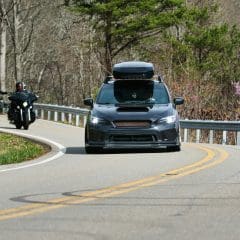
Whether it’s summer showers or winter rain, the motorcycle 4-second rule matters if you want to keep enjoying the freedom of the road on a bike. Creating a ‘bubble of space’ on a motorcycle isn’t just about comfort—it’s real protection. If the car ahead brakes hard, or a hazard appears from nowhere, staying upright takes space. Creating distance between your front tyre and the rear bumper ahead is a true life-safer.
One of the most vital habits in a rider’s toolkit is the 4-second rule. It’s the safety standard to use when roads are slippery. Anything from light drizzle to heavy downpours means surface grip drops, so you need more space on the road than the Highway Code’s recommended 2-second gap.
Maintaining a large enough gap to manoeuvre when things get real is a fundamental part of motorcycle roadcraft. It fits neatly with your other rider routines; like your pre-ride checks and the OSM-PSL routine you learned on your CBT course. All of these mean you’re not simply reacting to what’s going on around you, you’re actively managing risks—and that’s what makes a good rider great.
This blog breaks down exactly how to count your 4-second space. We’ll also cover why the physics of your bike and biology of your brain demand this extra space, and how this simple 4-second rule builds confidence when the weather turns.
Understanding theory is one thing; applying it at 60mph on a damp A-road is another. The 4-second rule isn’t about exacting measurements; it’s a practical, “rolling” calculation that relies on a fixed point and a steady rhythm. It’s no bad thing if you end up being a little over 4-seconds behind the vehicle in front. It’s always best to err on the side of safety.
Don’t look at the vehicle in front to measure your gap. Look for a stationary object at the side of the road—a lamp post, a road sign, or even a specific patch of discoloured tarmac.
A common mistake is counting “1, 2, 3, 4” too quickly. Using the “one-one-thousand” means you’re actually measuring seconds, not heartbeats. You can also count hippopotamuses, elephants, or repeat the classic “Only a fool breaks the two-second rule” (do that twice in wet weather) to get the same result.
Road conditions and traffic density change. Don’t just check distance once per ride. Whenever there is a change like…
…recount your safe distance.
Integrating this into your routine for smoother and safer riding makes it a subconscious habit rather than a chore. By the time you’ve finished your CBT or full licence training, this rhythm will feel as natural as using your indicators every time you turn.
Why be so bothered about four seconds? It’s because it’s the minimum time your brain and your bike need to handle a crisis well.
Before you touch your brakes, your brain needs to get into gear. When the brake lights of the car ahead flicker, this is what happens in your head:
In perfect conditions, this takes about 0.7 to 1 second. At 60mph, that means you’ve travelled nearly 30 metres before your brain’s told your hands and feet what to do. Add the distraction of rain on your visor or fatigue of a long ride, and that ‘thinking space’ stretches. Four seconds gives your biology the time it needs to respond to reality.
On a dry road, your tyres have better grip. In the wet, that grip can be halved. That’s down to a couple of factors…
When you grab the brakes too hard to compensate for a small gap, you risk locking the front wheel or triggering the ABS prematurely. With a 4-second gap, you have space for progressive braking—squeezing the lever gently to settle the front suspension before applying full force.
As we cover in our Ultimate Guide to Motorcycle Safety, managing these forces keeps your wheels upright rather than sliding across the tarmac. Your 4-seconds in wet weather is your way of working with the laws of physics, instead of against them.
The 4-second rule doesn’t exist on its own. It’s part of a sliding scale of safety that every rider should memorise. As road conditions deteriorate, your ‘bubble of space’ needs to expand.
In optimal conditions—clear skies, dry tarmac, and good visibility—keeping a two-second distance is your baseline. It’ll give you time to react to a sudden stop.
As soon as your visor fogs or the road starts to shine with rain, double your distance. This accounts for the increased braking distances and reduced visibility.
If you find yourself out in ice, snow, or thick fog, the rules change entirely. In these conditions, grip is almost non-existent. Visibility is minimal. A 10-second gap sounds like a lot—because it is. And it’s often the only way you can ensure you’ll stop in time without losing the front end.
If you’re unsure, check out our advice on safe motorcycle riding on Britain’s poor road surfaces to see how grit and ice change the game.
Following distance is integral to your OSM-PSL (Observation, Signal, Manoeuvre – Position, Speed, Look) routine. Your following distance is foundational for position, speed and look.
Your physical and mental state also impact the distance you should maintain. If you’re tired, cold or physically weary, be kind to yourself and add a second or two to your following distance.
You can have the best brakes in the world, but without the time to use them, they’re useless.
Maintaining a four-second gap is easy when the road is empty. It’s much harder when other road users decide to invade your bubble. These tips will help you handle the most common real-road challenges.
It’s a rider’s nightmare: you’ve carefully created a 4-second buffer in front, but the driver behind is sitting inches from your exhaust.
Extra weight means you need more space. A passenger or a full set of panniers increases your momentum making your braking distance significantly longer.
If you’re carrying extra weight in the wet, treat that 4-second rule as a bare minimum. Consider adding an extra ‘pillion second’. For more on this, consider taking some training specifically for riding with pillion passengers—it’ll keep you and your friend safer.
In heavy traffic, other drivers may see your 4-second gap as an invitation to pull in.
Don’t get frustrated; it’s an inevitable part of riding. Just ease off the throttle a little, count to four again, and reset your bubble. It’s far better to lose two seconds of your journey time than to lose your front end in an emergency.
Although precision isn’t paramount, you should avoid using your dashboard clock or guessing. Instead, choose a fixed roadside marker. A sign, lamp post, or bridge will do the trick. Start your count (“One-one-thousand, two-one-thousand…”) the moment the vehicle in front passes that marker. If your front tyre reaches that point before you finish saying “four,” you need to ease off and reset your gap by beginning the count again.
It’s not just motorcycles, cars need to extend their following distance in the wet too. It is more important for motorcycles for a few reasons…
Extra space is a rider’s only real safety net.
Absolutely. The Highway Code specifically instructs riders to at least double the standard 2-second gap in adverse weather. Mastering this isn’t just for the theory test; it’s a core skill examiners look for during your CBT and Module 2 road tests too.
It feels counter-intuitive, but you should increase the gap in front of you. By creating a 5 or 6-second buffer ahead, you make room for braking gently. This protects you from being rear-ended by the tailgater and gives them more time to react to your movements too.
The 4-second rule isn’t just a rule for learners; it’s a professional riding habit that separates the good from the great. It gives your brain the time to think and space for your bike to stop safely. Whether you’re a new rider on L-plates or a seasoned commuter, maintaining your ‘bubble of space’ is the most effective piece of safety kit you own.
Ready to level up your roadcraft? From your very first CBT to losing the L-plates with full licence training, our expert instructors will help you master the road. Book your training with us today and ride with total confidence, whatever the weather.
With Christmas just around the corner, you might be wondering what to get your favourite motorcycle...
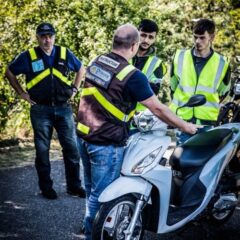
TL;DR: There’s never been a better time to join the UK’s highest-rated motorcycle training netw...

Getting a UK motorcycle licence can seem a complicated process. Particularly when compared to a dri...
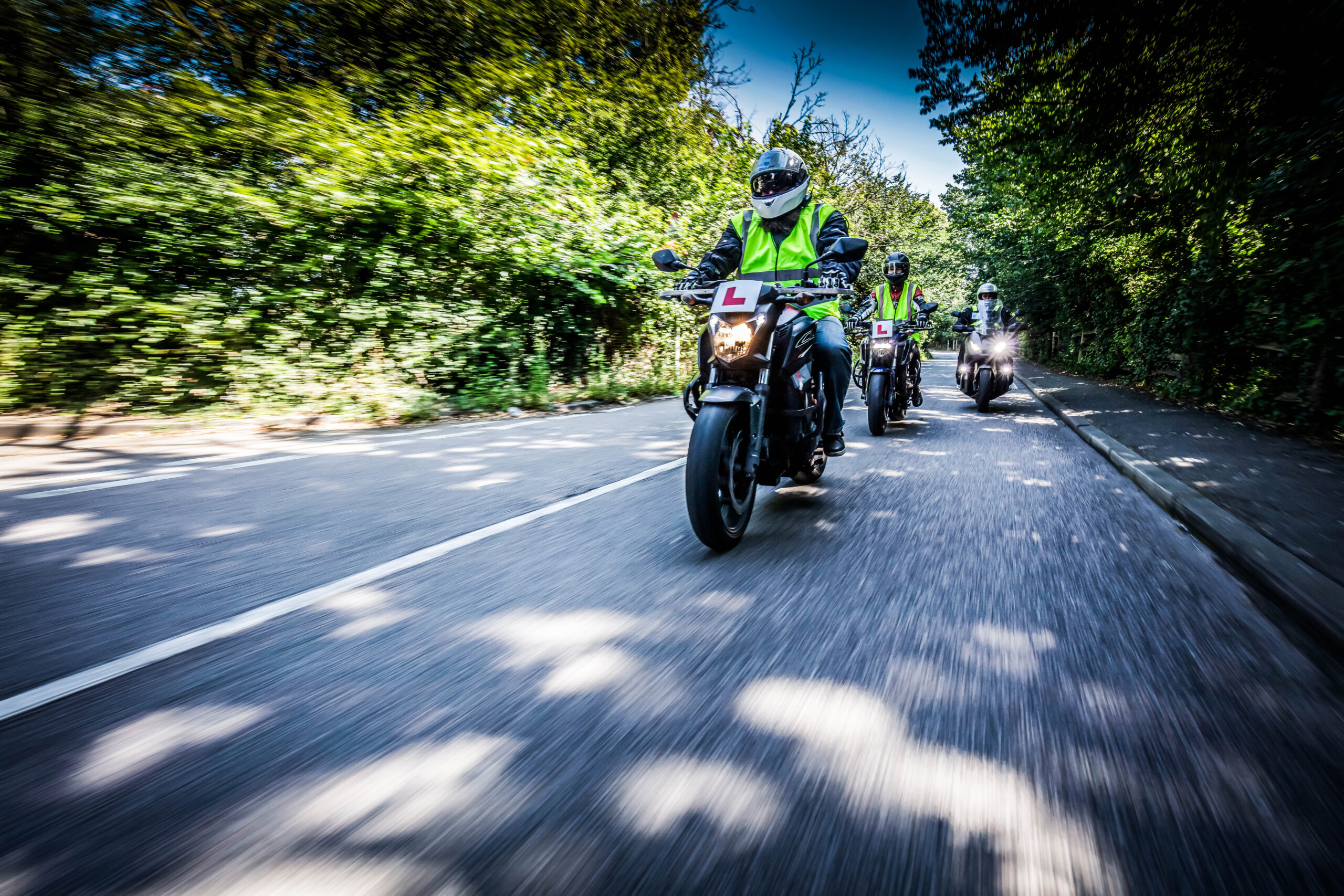
Phoenix Motorcycle Training is the UK’s highest rated and largest motorcycle training school, so wherever you’re going, we can help you get there.
This website uses cookies to personalise content, ads, and analyse traffic, sharing data with partners who may combine it with other information. See our Privacy Policy for more information.