
ERS
Intro to ERS
Enhanced Rider Scheme (ERS)
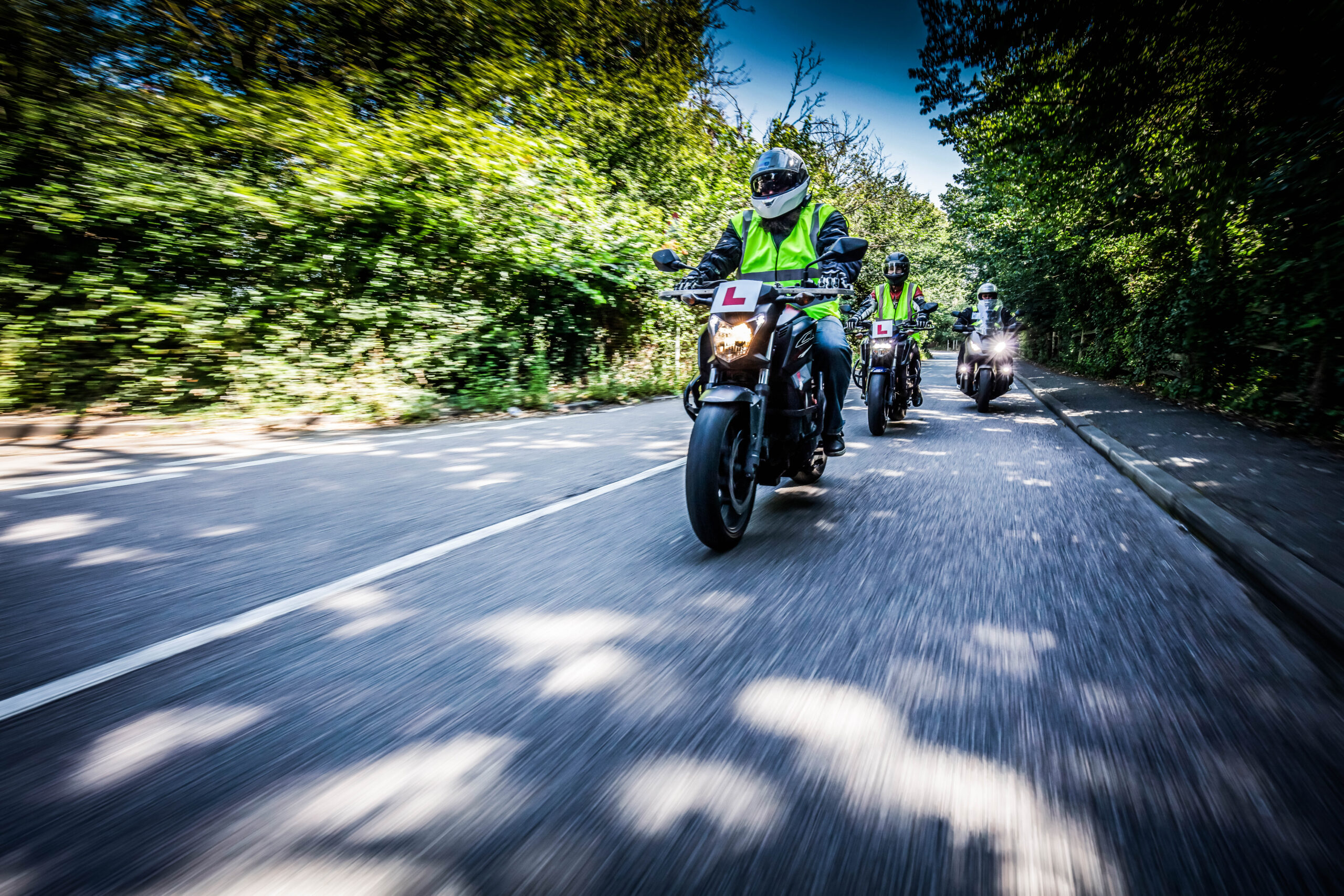
You can take the enhanced rider scheme if you’re a fully licensed motorcyclist and have passed your test. The scheme is suitable if you:
- have just passed your test
- are returning to riding after a break
- are upgrading to a more powerful motorcycle
- want to check your riding standard
This is a DVSA scheme and is the best place to start your path to better and more advanced riding and you can also get a discount on your insurance as well. Prices start from £220.00 per day which is normally 1 to 1. Multiple booking discounts are available. You will need your own bike and we are likely to cover about 100 miles, but this is totally dependent on the way the day pans out as we will change the plan to suit during the day.
The idea of the ERS scheme is to see what your riding is like at the moment, take a few elements of that ride and improve them. There is no test to pass or a standard to reach, we just need to see an improvement in your riding over the length of the course.
The normal length of the course is one day and we mainly focus on the country roads, as the skills we can learn there are skills we can transfer to the town, but not the other way round.
But most riders, however experienced, have areas of their motorcycling that could be better. So we will make a personal training plan for your needs.
There are 7 core modules:
Structured planned approach to riding
Defensive riding and hazard awareness
Progress and use of speed
Overtaking – filtering
Bends and corners
Slow control
Developing the correct rider attitude
Its best to do this on your own bike after you have had a while to get used to it, as you will get the most out of your new bike that way. However, if you want to take it on our bike and you can do that, but we recommend you do a 1/2 day assessment first, then complete the full day after that. This will ensure you get the best value out of the training. You might not reach the required standard on the first 1/2 day session.
If you are a new licence holder or have not been riding regularly we do advise to complete this assessment first before undertaking the ERS course.
The cost for the ERS assessment is £100. There is an additional fee of £20 if you wish to use one of our bikes for this.

Enhanced Rider Scheme
FAQs
No. Your CBT certificate is a permit to go with a full or provisional licence. You can’t carry a pillion passenger, and you’re not allowed on motorways. You need to display L-plates at the front and back of your bike too. Upgrading to a full licence (A1, A2, or unrestricted A) removes all of these restrictions.
Yes, a CBT certificate is valid for two years from the date of issue. When it’s due to expire, you have three options:
- Retake the CBT course
- Pass your theory and practical motorcycle licence tests for a full licence, or
- Stop riding on public roads.
Generally, yes. Insurers view CBT riders as higher-risk learners. Holding a full motorcycle licence shows your road competence. That usually leads to lower premiums. Holding a full licence also allows you to build up a long-term No Claims Discount (NCD).
In the short term, paying ~£200 for a CBT renewal feels cheaper than full licence training. But repeating your CBT course every two years becomes a money trap without gaining additional riding privileges. Full licence training is a one-time investment that eliminates renewal fees, riding restrictions, and opens access to lower insurance rates and bigger bikes.
Yes, but riding a 125cc bike on dual carriageways can feel underpowered and skittish. And while you are allowed to use dual carriageways, your not allowed to use motorways with your CBT certificate.
Most 125cc machines top out near 60–65 mph so overtaking or keeping up with fast-flowing traffic is very difficult. Upgrading to an A2 or full A licence lets you ride mid-capacity bikes that are heavier and handle 70 mph cruising speeds comfortably and safely.
No. A CBT certificate is only recognised in the UK, not internationally. If you want to ride overseas, rent a scooter on holiday, or go touring in Europe, check our guide on UK motorcycle licences and riding abroad to see why holding a full licence is essential.
Yes, but only if you are 24 or older. The Direct Access Scheme (DAS) lets you train and test on a full-power motorcycle without having to hold an A1 or A2 licence first.
The riding fundamentals are the same, but your machine control needs more precision. The extra weight demands tighter low-speed control. The added torque means smoother throttle discipline. Overall riding technique needs to be sharper, and your confidence should grow alongside your skills.
The Direct Access Scheme lets you train for the highest licence tier you can access for your age after gaining your CBT certificate. It means people who feel the pull to straddle a motorcycle later in life can train on a full-power machine (typically 650cc+) with a qualified instructor to prepare for and pass their Module 1 and Module 2 practical tests without moving through each of the UK licence levels.
Probably—most riders tip a bike over at walking speed at least once. It’s a normal part of the learning curve. The best way to prevent slow-speed tumbles is through practice: master your head-and-eye positioning, drag the rear brake, and rely on the clutch friction zone for control.
Middleweight roadsters and parallel twins in the 600–700cc range (such as the Yamaha MT-07, Kawasaki Z650, or Suzuki SV650) are ideal. They offer smooth, predictable power delivery, manageable seat heights, and comfortable, upright ergonomics.
Current UK motorcycle licensing rules do not require you to retake your motorcycle theory test if you hold an A2 licence for two years and upgrade to a full Category A licence via the progressive route.
However, if you are moving from a CBT straight to an A2 or Direct Access (DAS) licence, a valid theory test pass certificate is required to sit your Module 1 and Module 2 practical tests.
The DVSA is currently in consultation about this and the need to retake your theory test between licence upgrades may be scrapped.
Yes. Any No Claims Discount (NCD) earned while riding your 125cc motorcycle usually transfers to your policy when you upgrade to a larger machine—provided you stay with the same insurer or transfer the proof of NCD to a new provider.
Holding a full A2 or Category A licence rather than riding on L-plates with a CBT demonstrates lower risk to underwriters. That partially offsets the higher insurance group of a larger engine.
Most riders stepping up from a 125cc find manageable middleweights in the 400cc to 650cc range have the ideal balance of usable power, linear throttle response, and manageable weight. Bikes in this class give riders plenty of highway capability without aggressive power delivery, which can be intimidating when you first step up.
No. Proposed DVSA or government reforms are all focused on future changes to simplify progressive upgrades, make roads safer and encourage riders to progress the development of their riding skills. Current entitlements will remain valid. Taking your training now under the existing framework lets you build the necessary roadcraft. There’s no need to put your riding plans on hold.
It depends on your learning style, schedule, current confidence levels, and the age you are when you answer the call to two wheels.
Intensive, fast-track DAS courses (typically completed over 4 to 5 consecutive days) work brilliantly for riders who enjoy immersive learning and want to reach test readiness quickly.
Spreading lessons over several weeks gives you time to absorb feedback, practice mental processing between sessions, and accommodate a busy working schedule. Choosing which fits your lifestyle and learning needs is more important than any self-imposed deadlines you may have.
It depends on how long you ride and the conditions you’re riding in.
- Cheap over-clothing acts as a total rubberized or vinyl barrier and can be more watertight in short, torrential downpours because there are fewer exposed seams. On the downside, over-clothing lacks thermal insulation and breathability. So sweat can get trapped inside on long rides making you cold and damp from the inside out.
- Premium Gore-Tex textiles allow body heat and sweat to escape while keeping rain out. They’re a better choice for all-day touring and daily commuting. But they’re more expensive and can leak in extended downpours.
Neck and sleeve leaks happen when there is a gap or the layering between your kit isn’t ordered correctly.
To stop neck leaks, work with the simple waterfall principle: water flows downhill, so every outer layer must overlap the layer beneath it like roof tiles. Choose a jacket with a high outer collar and tuck your waterproof neck warmer inside the collar against your shirt. Ensure the back of your helmet overlaps the outside of your jacket collar. That way, rain dripping off your helmet slides down the exterior of your jacket rather than the inside.
For sleeves, cinch your inner jacket cuff tight, pull your glove gauntlet over it, and then pull your outer oversuit cuff over the glove. This creates a shingle effect so wind spray cannot force its way up your arms.
Look for gloves that feature a breathable waterproof membrane (like Gore-Tex or Drystar) paired with thermal insulation (like Thinsulate) on the back of the hand. Avoid overly thick padding on the palm side. Excess bulk reduces tactile feel on the throttle and levers. Ensure the gloves have reinforced knuckle armour, adjustable wrist straps to seal out drafts, and touchscreen-compatible fingertips so you don’t have to take them off in freezing rain to check maps. A built in squeegee on the left index finger is a nice to have and will help keep your visor clear.
A regular rain jacket will keep water off for a short while, but it’s not recommended for road riding. They’re not built to withstand high-speed wind force, so they flap violently, inflate like a parachute, and deteriorate quickly at highway speeds. The force of the wind can also drive the water through the fabric causing you to become damp anyway. Standard rain jackets offer little water resistance on a bike and zero abrasion resistance if you slide on tarmac. Dedicated motorcycle wet weather gear is made from heavy-duty, tear-resistant materials with reinforced seams designed specifically for wind pressure and motorcycle safety.
The Safe System approach accepts that human beings occasionally make mistakes on the road. Instead of blaming only rider or driver error, this framework asks for road designs with a forgiving infrastructure. Features like safer junctions, protective barriers, and specialised road markings, so a simple mistake or momentary lapse doesn’t result in fatal consequences.
The UN’s challenge isn’t legally binding for laws in the UK, but it does heavily influence policy directions set by the Department for Transport (DfT) and the DVSA. UK authorities are already reviewing consultation documents covering moped and motorcycle training frameworks. They’re looking at potential time limits or caps on repeated CBT renewals and changes to the progressive licensing route that would cut repetitive testing so they can encourage riders to progress to full licences and continuous skill development.
Yes. Physical infrastructure upgrades take time to roll out nationwide. Rider skill and training give you immediate control over your safety. By combining advanced physical riding techniques with high situational awareness, mental preparedness, and hazard perception, you learn to read poor road surfaces, anticipate danger early, and work within your limits to adapt your road positioning before a hazard turns into an incident.
Yes. You can legally work as a delivery rider with a valid CBT certificate. You need to make sure your moped or scooter is registered, roadworthy, and covered by valid commercial hire-and-reward insurance.
No. Standard motorcycle insurance for social, domestic, and pleasure (SD&P) riding does not cover your employment for commercial food or parcel delivery. You’ll need to get specific hire-and-reward commercial insurance to have legal gig rider cover for making deliveries.
Your CBT certificate is valid for two years. There is no automatic extension for delivery riders. If you don’t pass your full motorcycle test within that two-year window, you must retake the CBT course to continue riding legally.
There is currently no law banning CBT certificate holders from working as delivery riders. There is an active consultation by the DVSA looking into the entire motorcycle training and licensing system including minimum learning periods and progressive access to the full licence levels (A1, A2 and full unrestricted A). Any changes based on these consultations will take time—at least 18 months—before they become law.
No. Your test pass certificate is valid for two years from the date you passed. You only need to re-take your motorcycle theory test if this time has passed and you’ve not passed the practical Mod 1 and Mod 2 full motorcycle licence test.
No. All other parts of the motorcycle theory test are staying the same. The pass mark for the multiple-choice section (43 out of 50), total test duration, test content and road safety standards are the same. The only difference is how the case study scenarios are presented.
The change makes the theory test far more accessible—especially for neurodivergent learner riders, including those with dyslexia, autism, ADHD or similar learning differences. Using short video clips instead of lengthy paragraphs assesses real-world hazard evaluation visually. This gives examiners a better view of a rider’s practical understanding of safe road riding than the previous text-heavy passages could.
The Safe Driving for Life website has official practice materials and free practice tests. Esitu has practice materials for the motorcycle hazard perception test and our Pre-CBT resources will help you build confidence and prepare for your theory test and Compulsory Basic Training course.
- Urgent mental-health support: Call NHS 111 and select the mental-health option. You may be connected to a trained mental-health professional. NHS urgent mental-health help
- Someone to talk to: Call Samaritans free on 116 123, at any time of the day or night. You do not need to be suicidal to contact them. Contact Samaritans
- Immediate danger: Call 999 or go to A&E if you or someone else is in immediate danger.
- Do not act on it simply because the coach produced it
- Stop the conversation if necessary
- Check technical riding questions with a qualified motorcycle instructor
- Speak to Claire if you need individual mindset coaching
- Contact an appropriate healthcare professional about physical or mental-health concerns
- Use emergency services if you or someone else is in immediate danger
- Being clear when someone is interacting with AI
- Obtaining informed consent
- Protecting privacy and personal information
- Recognising and reducing bias
- Testing and monitoring the system
- Maintaining clear professional boundaries
- Explaining the limitations of AI-generated responses
- Providing access to human or specialist support when needed
-
- Clearly identifies itself as an AI service
-
- Uses the concepts within Remember You’re a Rider and Claire’s established coaching approach
-
- Helps you examine a situation and consider your options
-
- Does not make decisions for you
-
- Does not diagnose physical or mental-health conditions
-
- Does not provide medical advice
-
- Does not teach technical riding skills
-
- Does not assess whether you are competent or safe to ride
-
- Directs technical riding questions to a suitably qualified motorcycle instructor
-
- Signposts to 1:1 coaching, professional training, healthcare or emergency support when appropriate
-
- Has been tested with riders and will continue to be reviewed and improved
Riding anxiety on a larger bike usually stems from an overstimulated nervous system, not a lack of physical skill. To calm your mind on the road, consciously drop your shoulders, loosen your grip on the handlebars, and breathe rhythmically through bends. Breaking rides down into shorter, familiar routes and gently expanding on those routes allows your brain to build proof of your competence without cognitive overload.
Remind yourself that feeling hesitant is a normal part of adjusting to extra weight and power. It’s a sign you’re learning—not a sign that you aren’t ready.
Mental hesitation often happens when your internal voice of doubt becomes louder than your instructor’s guidance. If fear or self-doubt is locking up your arms or causing target fixation, tell your instructor.
The right instructor won’t push you through blind repetition; they’ll pause, break the manoeuvre down into smaller steps, and adapt their teaching style to your learning pace.
Don’t push yourself to perform perfectly, try the manoeuvres and gather your own data from each attempt as well as from your instructors feedback. Lowering the pressure you put on yourself restores fluid body movements.
Because all of our instructors have Level 3 Education and Training (RQF), they know how to recognise different learning styles, anxiety triggers, and physical requirements. We also have at least on Mental Health First Aid instructor at each school, so there’s always someone to talk to if you’re feeling nervous.
Rather than following a rigid, one-size-fits-all style of teaching, our instructors adjust the pace, feedback methods, and manoeuvre steps to suit you. Whether you need patient step-by-step confidence building after a long break, bespoke machine adaptations for physical requirements, or a little more repetition to get something to “click”, our instructors customise their teaching style so you learn comfortably and safely.
Ensure your bike is mechanically sound and ready to ride. Check your tyre pressures and tread depth, inspect your brake pads, and check your exhaust complies with circuit noise limits. You’ll also need to tape or remove your mirrors, and bring your full motorcycle licence along with full protective gear (helmet, full or 360° zip leathers, boots, and gloves).
Pack essential tools and arrive early for sign-on, complete the noise test, and attend the mandatory safety briefing before heading out for your sighting laps. Taking an advanced training course beforehand is also one of the best ways to get yourself track-ready.
Usually, yes. Many major UK track day organisers and circuit providers offer track-prepped motorcycle hire for the day. These must be booked well in advance, so ask when choosing and booking the day at your chosen track.
No, advanced training is not mandatory. However, taking a course like our PROskills advanced training before your track day helps you master machine control and vision techniques. That lets you get the maximum value and enjoyment out of your track time.
If your goal is pure speed and fun without instruction, choose a track day. If your goal is to improve cornering technique, build real-world confidence and fix bad habits, start with advanced rider training.
Track days are non-competitive, open-session riding days focused on personal fun and practice. Amateur racing involves timed qualification, grid starts, wheel-to-wheel competition, and strict ACU race regulations.
Absolutely. Riders who complete advanced training beforehand ride with far more confidence, smoother lines, and relaxed body positioning, making the track day experience much safer and significantly more fun.
Yes, provided you join the novice group. Novice groups feature strict overtaking rules and a supportive pace, making them a safe space for newer riders to experience open circuit riding without pressure.
You don’t have to have track day insurance to ride, but standard road insurance policies won’t cover circuit damage. Arranging a dedicated track day insurance policy means you’re covered for accidental damage to your bike while on track.
No. Used motorcycle values in the UK have stayed remarkably firm compared to pre-2020 levels. Persistent inflation, rising prices for brand-new bikes and steady demand from both commuters and upgrading riders mean good-condition secondhand machines are holding their value. Reports from the National Motorcycle Dealers Association (NMDA) highlight that healthy used bike prices are cushioning overall dealer and trade revenues.
Yes. High CBT registration volumes, coupled with a steady stream of riders pursuing Direct Access Scheme (DAS) full-licence training, have created widespread demand for DVSA-qualified motorcycle trainers. Combined with test centre bottlenecks, many Approved Training Bodies (ATBs) across the UK are actively searching for riders keen to begin a career in motorcycle training to help clear backlogs and meet future student demand.
Absolutely. Female riders now account for approximately 8% to 10% of all DVSA motorcycle test-takers—a proportion that’s growing year-on-year. According to BMF industry commentary, this demographic shift has created strong demand for female instructors who can provide a supportive, relatable learning environment for new female students.
Across the UK, more than 100,000 practical motorcycle tests (combining Module 1 and Module 2) are taken annually. Specifically, official DVSA driver and rider testing statistics show that over 60,000 Module 2 road tests are taken each year. Considering Module 2 tests can only be taken once Module 1 has been passed, this shows strong demand for getting on the road with two wheels.
Technically, any experienced rider could supervise a learner on a provisional licence. They’d need to be at least 21, hold a full licence for that category of bike for three years, and ensure the learner displays L-plates. However, uncertified experienced riders cannot charge money, accept gifts, or receive any form of reward for supervising learner riders. It’s a criminal offence to accept payment for motorcycle training unless you are officially certified by the DVSA and working through an Approved Training Body (ATB).
You can’t progress to the Mod 2 test if you haven’t passed Mod 1.
If you fail Mod 1, you’ll need to wait a minimum of three working days before retaking it. The biggest headache here is timing. If your Mod 2 test is booked shortly after your Mod 1, a fail on the pad means you forfeit your Mod 2 booking fee. That’s because of the three clear days’ notice the DVSA requires for cancellations and changes.
Booking test modules through an approved training school protects your schedule, as schools can manage block bookings to keep your training timeline on track.
Before jumping into your Module 2 test, your examiner will ask you two safety-related “Show me, Tell me” questions:
- Show me: You need to physically demonstrate the answer.
- Tell me: You’ll explain how you’d do it.
These questions cover everyday maintenance basics like checking tyre tread depth and pressure, oil levels, or chain tension. You may also be asked a “tell me” question about how you would adjust your bike’s suspension, headlights, or tyre pressures if you were carrying a pillion passenger.
There is no legal minimum or recommended number of hours required for training. We all learn at different rates, so the exact timeframe depends on your prior road experience, balance, and how frequently you ride on your CBT.
Riders who’ve spent two years commuting daily on a 125cc generally need fewer hours to adapt to a bigger machine than someone who hasn’t ridden since their initial training. For a realistic breakdown based on different experience levels, check out our full guide on How Many Lessons Do You Need For a Motorcycle Licence. Remember, if you are stepping up after a break, it’s worth double-checking your paperwork to see if you need a refresh, as detailed in our guide on Do CBT Certificates Expire?
The test consists of 14 CGI video clips showing everyday road scenes filmed from a vehicle’s perspective. You need to watch the screen and click your mouse whenever you spot a developing hazard. 13 of the clips contain a single developing hazard. One clip contains two hazards.
The sooner you spot the hazard and click, the more points you score (from a maximum of 5 down to 1 point per hazard). There’s a total of 15 scorable hazards with a possible maximum score of 75.
A static hazard (like a pedestrian standing on the pavement or a car parked at the side of the road) becomes a developing hazard the moment it begins to move or act in a way that would force you to take action. A pedestrian stepping toward the road, a parked car’s indicator turning on, or a van beginning to pull out into your lane are developing hazards because they’re moving. You only score points for clicks made within the window after the hazard starts actively developing.
Yes. The DVSA uses a built-in anti-cheat algorithm to stop people from simply clicking continuously across the screen to guarantee a score. If you click in a repetitive pattern, double-click constantly, or spam clicks across the clip, the system flags your attempt as a cheat and awards you a score of zero for that entire clip.
Yes. Even if you already have a full UK car driver’s licence and passed a car theory and hazard perception test in the past, you’ll need to pass a dedicated motorcycle theory test (which includes both multiple-choice questions and the hazard perception clips) to get your motorcycle licence. The only exception is if you have already passed a motorcycle theory test for a lower category (like an A1 licence) and are upgrading your bike licence category.
The Approved Driving Instructor (ADI) test is notoriously challenging, but it is actually the qualification route for driving instructors (cars), not motorcycle instructors.
Motorcycle instructors do not take the ADI exam. Instead, they follow a completely different DVSA path consisting of advanced motorcycle theory, local down-training, a dedicated two-day CBT assessment, and a half day exam for DAS training qualifications at a regional centre like Cardington.
You don’t need any qualifications to start training, but you must meet these strict UK legal prerequisites:
- Be 21 or over.
- Hold a full, unrestricted Category A or A2 motorcycle licence.
- Have held that full licence for a minimum of three years.
- Have a clean, valid driving record and pass a basic Criminal Record Check (DBS).
- Be able to read a standard vehicle registration plate from a distance of 20.5 metres (with glasses or contact lenses if required).
The primary difference is the size of the motorcycle you’re legally allowed to train students on:
- CBT Instructors: Certified to deliver Compulsory Basic Training to beginners on lightweight machinery up to 125cc (with a maximum power output of 11kW).
- DAS (Direct Access Scheme) Instructors: Have cleared an additional, separate half-day DVSA exam that certifies them to coach riders on larger, unrestricted motorbikes (over 125cc). DAS instructors can prepare students for their full Category A and A2 licence tests.
Average fitness is all you need. Off-road riding is an active, full-body workout, but it also relies on your bike physics, balance, and smooth throttle control so brute muscle power isn’t needed. If you can manage a standard day of street riding, you can handle a day on the trails.
Not at all. Our trail riding days are all about giving you a taste of off-road riding. We provide road-legal, modern trail motorbikes (like Honda or Fantic bikes) and a full kit of certified protective armor (helmet, boots, gloves, and motocross-style body armour) completely included in your course fee. You just need to show up in comfortable layers. If you have high-leg adventure-style boots, feel free to wear them on the day.
For a closer look at the specific armor needed to keep you safe in the mud, read our helpful guide on choosing the right trail riding gear for an off-road adventure.
Yes. A day with Phoenix Trails will guide you onto live public Byways Open to All Traffic (BOATs). Even though these are off-road trails, they’re categorised as public highways so you must have a valid UK motorcycle licence (A2 or Category A) to ride on them. This also means everyone has a basic understanding of machine control and road dynamics, so your instructors can focus on teaching you off-road technique rather than basic clutch control.
If you’re still figuring out your pathway to a full category A, check out our comprehensive guide on what to expect from professional motorcycle training courses in the UK to get up to speed.
No, you do not need a full UK car driving licence to learn to ride a motorcycle. You do need a provisional driving licence, which you can get from the age of 15 years and 9 months. Once your provisional licence arrives, you’re legally allowed to take the Compulsory Basic Training (CBT) course. This is your gateway to road riding with a 50cc moped or 125cc motorcycle depending on your age.
Yes. Unlike learning to drive a car, which is typically done over a matter of weeks or months, most riders choose an intensive approach. The Direct Access Scheme (DAS) motorcycle course consolidates training into consecutive days, building consistency, muscle memory, and confidence much faster. This format is considered the most efficient way to progress smoothly from your initial CBT through to your module 1 and module 2 practical tests.
You can save thousands of pounds each year by switching from a standard car to a lightweight commuter motorbike or scooter. You’ll double, if not triple, your fuel economy (achieving 90 to 120+ mpg), cut your annual road tax to just £27, and secure significantly lower first-time insurance premiums. Daily running costs are slashed by more than half. When you factor in free urban parking and handling basic maintenance as simple DIY tasks, the financial savings stack up quickly.
Expect it to take roughly 4 to 8 hours of solid riding time to fully break in a high-quality pair of boots. Because they rely heavily on thick leather and heavy TPU plastics for protection, they’ll feel strangely stiff right out of the box. You can speed up the process by wearing them around the house or flexing them manually before your first big trip. But the best (and most fun) remedy is simply more time on your bike.
You can walk in them, but how far depends entirely on the boot style. Adventure boots are the most flexible and are comfortable enough for a stroll around a trail-side cafe or campsite.
Trail and enduro boots allow for short, tactical walks—like scouting a deep puddle or helping a mate push their bike up a slippery slope.
Pure motocross boots are like ski boots; they’re designed purely for the pegs and make walking long distances awkward and exhausting.
Generally, yes—going up half a size or one full street-shoe size is common, but it depends heavily on the brand, and how you intend to wear your off-road boots. Off-road boots have rigid toe boxes that will not stretch over time. Depending on your preferences, you may need to account for thick, cushioned riding socks or waterproof liners.
A Quick Tip on Fit: When you try on new boots, always wear the exact socks you plan to ride in. A pair of boots that feels incredibly comfortable in thin everyday socks can easily cause your toes to go completely numb once you swap to a thick winter pair on the trail.
Sorry, no. Steel-toe work boots, Dr. Martens, and wellies are not designed to withstand the forces of off-road riding. That’s because they don’t have the ankle rigidity needed for preventing severe twisting injuries.
Not only that, with work boots or DMs you’ll get zero shin protection against flying rocks, and the soft construction easily folds under the weight of a dropped motorcycle. Wellies are also a major hazard; you’ll have little to no grip on bike pegs and can easily hold water or be trapped in mud and slip off. Dedicated off-road boots are non-negotiable for safety, comfort and riding ability.
It’s mostly the balance between rigid impact protection and walking flexibility. Motocross (MX) boots are engineered for closed-course tracks with high jump risks, so they have an incredibly stiff ankle structure and smooth soles to prevent catching on the ground. Great for riding, not so much for walking.
Trail and enduro boots offer similar impact armor but have lugged soles (with indents and ridged tread) for grip and slightly more toe to heel flex so you can comfortably handle slippery, muddy green lanes when off the bike.
Yes, filtering through slow traffic is legal and expected in Italy. Remain cautious of local drivers and only filter when traffic is crawling.
Zona a Traffico Limitato are restricted areas in city centers. Most are policed by cameras. Unless you have a permit (usually from your hotel), entering a ZTL will result in a heavy fine.
Yes. Italian law requires motorcycles to use dipped headlights at all times, even during the brightest daylight hours, on all roads.
Yes. To be legal, your helmet must have four reflective stickers that are a minimum 18cm² each. You need one on the front, back, left, and right.

Yes. Both the rider and passenger must wear CE-certified protective gloves. Failure to do so can result in an on-the-spot fine.
It is an emissions sticker required to enter low-emission zones in cities like Paris or Lyon. You should buy this online before you travel.
No, filtering is illegal in Spain. You must stay in your lane like a car. Be aware also that new 2026 rules allow a rescue lane for emergency vehicles which motorcycles must not use for overtaking.
Yes. If your licence states you need corrective lenses to drive, Spanish law requires you to carry a spare pair of glasses in your luggage.
Passengers must be at least 12 years old. If you are the child’s parent or legal guardian, this is reduced to 7 years old.
For most new riders in the UK, the best beginner motorcycle is a 125cc (if you’re 17 or older). This is the maximum engine size you can legally ride on a CBT (Compulsory Basic Training) once you are 17 or older. A 125cc bike is lightweight, fuel-efficient, and the perfect tool for building the confidence and gear-shifting skills you’ll need before progressing to a full licence.
While it’s tempting, we usually recommend waiting until you have completed your training. The training bikes you’ll ride during your course at Phoenix can give you a better feel for what ergonomics suit you. Plus, you’ll avoid the frustration of having a bike in the garage that you can’t legally ride yet!
Not necessarily. A high-mileage bike with a full service history is often a better buy than a low-mileage bike that has sat rotting in a shed for three years. Check the consumables like tyres and chains; if they are well-maintained, the engine likely is too.
Absolutely. If you can’t get your feet down comfortably, you will lose confidence during slow-speed manoeuvres and stopping at junctions. While you can buy lowering kits, starting with a bike that fits your stature naturally is always the safest option.
It’s not essential in a legal sense for older used bikes, but it is recommended. ABS can prevent the wheels from locking up during an emergency stop, which is one of the most common causes of accidents for new riders. Most modern bikes (2016 onwards) have ABS as standard.
A to AAA categories for Motorcycle CE ratings indicate material performance under laboratory conditions. They’re not guaranteed safe-slide-speed categories. That said, AA gear is tested to provide protection at typical road speeds. AAA is designed for the higher stresses of track and motorway use (speeds of 70 mph or more).
Legally, the requirements are the same (a certified helmet). Practically, you should aim for higher abrasion resistance (AA or AAA) as you move away from slower roads and onto faster, busier roads.
They’re different things, so they can’t really be compared. The ‘Class AAA’ on a jacket refers to the abrasion resistance of the material. ‘Level 2’ refers to the impact absorption of the pads inside. For the best protection, look for a jacket that offers both Class AAA abrasion category and Level 2 impact armour.
Although precision isn’t paramount, you should avoid using your dashboard clock or guessing. Instead, choose a fixed roadside marker. A sign, lamp post, or bridge will do the trick. Start your count (“One-one-thousand, two-one-thousand…”) the moment the vehicle in front passes that marker. If your front tyre reaches that point before you finish saying “four,” you need to ease off and reset your gap by beginning the count again.
It’s not just motorcycles, cars need to extend their following distance in the wet too. It is more important for motorcycles for a few reasons…
- Motorcycles rely on two tiny patches of rubber roughly the size of a credit card to grip the road and stop.
- In the wet, sudden braking can lead to a front-wheel lock-up or trigger an ABS intervention that can increase stopping distances.
Extra space is a rider’s only real safety net.
Absolutely. The Highway Code specifically instructs riders to at least double the standard 2-second gap in adverse weather. Mastering this isn’t just for the theory test; it’s a core skill examiners look for during your CBT and Module 2 road tests too.